


Crawler Excavator
What is Crawler Excavator
Unlike other large excavators that run on wheels, crawler excavators run on two large endless tracks and are optimal for mining and heavy-duty construction jobs. Also known as compact excavators, these excavators use hydraulic power mechanisms to lift heavy debris and soil.
Benefits of Crawler Excavator
Efficiency
Crawler excavator are known for their efficiency, and they can handle large amounts of material in a short amount of time. They also have high-powered hydraulic systems that allow them to work quickly and efficiently, reducing the amount of time and labour required for a project.
Power and strength
Crawler excavator are equipped with powerful engines and hydraulic systems, making them strong and capable of handling tough and heavy-duty tasks. They can dig deep into the ground, break down large structures, and move massive amounts of materials.
Precision and control
Crawler excavator are equipped with precision controls and instruments that allow the operator to perform tasks with accuracy and control. They are equipped with joysticks and control panels that make it easy for the operator to manoeuvre the machine and control the attachments.
Improved safety
Crawler excavator are designed to improve safety in the workplace. They are equipped with safety features, such as stability control and emergency shut-off buttons, that help prevent accidents and injuries. Additionally, they reduce the amount of manual labour required, making work processes safer and more efficient.
-
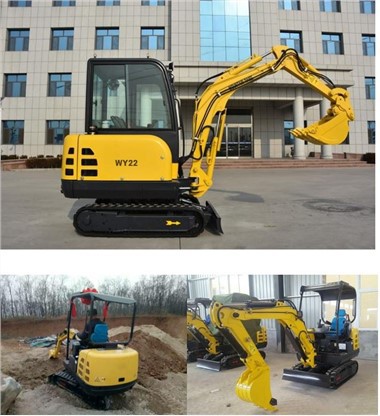 TB2.2T Hydraulic ExcavatorAdd to Inquiry
 -
 MINI EXCAVATOR TB181.Small size and easy to transport, could be loaded onto light truck or small trailer, four setsAdd to Inquiry
 -
 TB101. Small size and easy to transport, could be loaded onto light truck or small trailer, sixsetsAdd to Inquiry


- Tel: +8618857919561
- Fax: +86-571-64142286
- Email: sales@tobemac.com
- Add: Hutang Industrial Park, Daciyan Town, Jiande City, Zhejiang Province, China
Why Choose us
Wide range of products
They offer a wide range of products, including concrete mixer truck, concrete boom pump, concrete batching plant, and other heavy construction machinery and equipment.
Experienced team
Their team members have years of experience in the construction machinery industry, and they have a good understanding of the needs and requirements of their clients.
Quality assurance
They have a strict quality control system and have achieved ISO 9001:2015 certification. Their products are tested at different stages of production to ensure quality and reliability.
Satisfied customers
They have served numerous clients from all over the world, and their customers are highly satisfied with their products and services.
Competitive prices
They offer highly competitive prices for their products, ensuring that customers get the best value for their money.
Types of Excavator
Crawler excavators
Also known as standard excavators or track excavators, crawlers run on two treads instead of wheels. Although they are slower than wheeled excavators, their treads make them better suited for rough or uneven terrain. As the standard, crawler excavators can be found in many different types of construction sites. However, they're most commonly used in mining operations, trench digging, and landscape grading.
Mini excavators
In recent years, mini excavators have become popular on jobsites. Also known as compact excavators, they're considerably smaller than other kinds of machinery. It is because of this that most mini excavators have reduced (or, in some cases, zero) tail-swing. This makes them optimal for job sites that require delicate work or have many obstacles that need to be avoided. Part of their popularity can be attributed to their ability to work indoors.
Long reach excavators
As the name suggests, long reach excavators feature a long, extendable boom and arm. The two together can range from 40 to 100 feet in length. With a wider reach, these excavators are well-suited to reach long distances and places difficult or dangerous for operators. Unfortunately, their long reach also makes them difficult to use in small spaces or tight corners. They're commonly found at heavy-duty digging sites and demolition projects.
Dragline excavators
Unlike other kinds of excavators, dragline excavators utilize a hoist rope and dragline system to maneuver the bucket, instead of the usual arm and boom. They're larger than other types of excavators, and because of that they are usually assembled on-site. Their size also makes them especially good at deep digging, with a maximum digging depth of 65 meters. The dragline system makes it especially useful when working underwater, like at dock jobsites. Other common uses for dragline excavators include deep piledriving and road excavations.
Suction excavators
Suction excavators, also called vacuum excavators, are best known for their suction capabilities. They are fitted with a suction pipe and a water jet to create a suction power of 200 miles per hour. Suction excavators have very specific purposes, but they're extremely useful in those cases. Its pipe is usually around 30 centimeters in diameter, making it ideal for underground work, delicate terrain, or precise operations. On larger operations, however, they are not particularly useful.
Skid steers
The main difference between skid steers and other types of excavators is that the boom and bucket of the machine faces away from the driver. Usually, skid steers are utilized in residential work, site clearing, and debris removal. This is because they're smaller and more compact, making them good at maneuvering through narrow or tight spaces. They have wheels instead of tracks, making them faster but unable to ride over rough terrain.
Hydraulic shovels
Hydraulic shovels are considered the most powerful type of excavator. They're very large and have powerful engines, making them useful for lifting or moving heavy objects. They can usually be found at mining operations or heavy digging projects. Their large size makes them a hindrance on smaller jobsites.
Crawler Excavator Attachments
Tracks
Usually made from steel of reinforced rubber, these move the excavator across the terrain. Wheeled varieties of excavators, naturally, would have a set of wheels in place of tracks.
Track frame
Comprises most of the machine's undercarriage. This is where the mechanisms that move and rotate the tracks are housed, and where the undercarriage is connected to the rest of the excavator. Wheeled excavators would have a similar frame that houses the mechanisms that move and turn the wheels.
Cab
The place that the operator sits. It contains all of the controls to use the crawler excavator, and it protects the operator from outside hazards.
Counterweight
Keeps the crawler excavator from tipping over by balancing out the weight of the arm. Their size varies depending on the weight of the arm and overall size of the machine.
Engine
The source of power for the crawler excavator. Almost all excavators run on diesel fuel. The engine not only allows the machine to drive, but it powers the hydraulics that move the arm.
Boom
The upper part of the crawler excavator's arm. It is connected to the cabin and usually is only capable of vertical movement. Knuckle booms, although less common, have the ability to swing left and right to a certain degree.
Stick
The lower part of the crawler excavator's arm. A hydraulic cylinder operates the stick, pulling it towards the boom to create digging movement.
Bucket
Connected to the stick, the bucket is fixed on a joint that allows it to scoop. Buckets are certainly the standard, but they are not the only thing that can be attached to the end of the stick.

Crawler Excavator Attachments
Buckets
The most common attachment on excavators. All buckets have toothed edges that assist in scooping and digging. Even buckets come in a variety of sizes to suit different needs.
Clamps
Some materials might be too large to safely move with just a bucket. Clamps allow the excavator to grip larger objects, such as boulders or tree stumps.
Augers
Used primarily for drilling into terrain, these attachments consist of a helical blade and hydraulic circuits. Similar to buckets, they come in a variety of specifications depending on the size of the hole and the material that needs to be drilled through.
Breakers
Larger versions of jackhammers that attach to excavators. They’re primarily used for breaking down strong materials like stone and concrete. Some breakers can provide up to 1000 lbs of impact energy.
Couplers
As the name suggests, they are attachments that allow operators to quickly attach (and detach) tools and attachments. Couplers limit how much you can modify your excavator, but they make it possible to switch attachments without an entire crew.
Construction
Crawler excavators are extensively used in construction activities such as building bridges, roads, tunnels, dams, and buildings. They provide a powerful and efficient solution for excavation, grading, and demolition tasks.
Mining
Crawler excavators are widely used in mining activities. Mining involves digging and extracting minerals and other valuable resources from the earth. Crawler excavators with their robust design and powerful hydraulic systems are capable of performing heavy-duty digging and excavation work in the mining industry.
Forestry
In the forestry industry, crawler excavators are used for cutting and clearing trees, building logging roads, and maintaining forest trails. They are also used for creating fire breaks, building dams, and other infrastructure in remote forests.
Waste Management
Crawler excavators are commonly used in waste management activities such as landfill construction, waste segregation, and recycling. They are capable of handling large volumes of waste efficiently.
Agriculture
Crawler excavators are also used in agricultural activities such as land clearing, leveling, and desilting of irrigation channels. They are also used for digging, trenching, and plowing agricultural fields.
Ground conditions
Accessing ground conditions is extremely important while selecting the type of excavator needed at the jobsite. Generally, crawler excavators work very well when used for excavating, grading, and site development. For these applications, they can be fitted with various attachments. Some crawler excavators are even designed with reduced-tail-swing configurations which make them good for limited-space commercial or residential jobsites or new road and bridge construction projects. If the ground condition is loose or slurry, you should definitely select a long crawler excavator with a wider track shoe configuration for higher adaptability.
Machine stability
This is another important factor to be considered before selecting any heavy equipment like a crawler excavator. Generally, crawler excavators are the best for heavy-duty digging and lifting applications as they can maintain great contact with the ground due to their tracked undercarriage, thereby, creating a stable machine (as against the wheel excavators that depend on their tires, a dozer blade, and outriggers for their stability). In fact, the tracks of the crawler excavator offer excellent traction and a good mass distribution over their entire contact surface.
Transportation cost
Crawler excavators as against wheel excavators do not have wheels and hence, cannot be transported easily by road. So, if you need to move your crawler excavator between various jobsites, then you need to account for its transportation cost before only. In fact, for transportation, the crawler excavators need to be matched to appropriate-sized trailers. Thus, the transportation cost associated with a crawler excavator is high as compared to wheel excavators. However, in cases of usage of crawler excavator in mining or quarries, the equipment need not be moved as it will be needed at one location only for entire of its life. That said, typically crawler excavators are used when you don't have to move the equipment too much in uneven areas or on soft ground. Further, the travel speed of a crawler excavator does not exceed 6km/h, so they are used for applications where the excavator does not have to travel frequently over significant distances
Attachment versatility
Before making the purchase decision, you should also consider the ability of the crawler excavator to be paired with a variety of attachments as this can help you to perform different tasks at the jobsite. Various common attachments for crawler excavator include hydraulic breaker for demolishing existing structures and concrete or asphalt, grapple for land clearing, clamshell for material unloading, quick coupler for faster work tool change over, a trenching bucket to dig foundation footings or excavate for underground utilities, or a plate compactor to finish trenches.
Maintenance requirement
As the crawler excavator's are designed for use in rough and uneven tough underfoot conditions, their undercarriage consists of many moving components and wear items that need to be maintained for the machine to function properly. Hence, you should consider the maintenance cost of crawler excavator before making the purchase decision.
About Us
Hangzhou Tob Engineering Machinery Co.,Ltd.,is one of the professional manufacturers of construction and engineering equipment in China. Situated in Jiande City, Hangzhou, which is about 100 kilometers away from Yiwu and 250 kilometers away from Ningbo Port, we enjoy an advantageous geographical location. The history of our manufacturing in construction machinery can be traced back to 1991. In 2008, the foreign trade department has been established and our goods started to be exported abroad. In 2016, we moved to the new factory in Jiande City, which covers an area of about 20000 square meter. We are very confident to enlarge our business scope in the brand new factory.
As a rapidly growing company specializing in the design and production of an extensive range of equipment in construction and engineering industry, we could supply you with products as follows: Concrete Mixer, Concrete Mixing Plant, Concrete Block Making Machine, Concrete Mixing Truck, Concrete Pump, Site Dumper, Wheel Loader, Small Crane, Tower Crane, Construction Lifter, Vibratory Roller, Light Tower, Plate Compactor,Tamping Rammer, Power Towel,Concrete Cutter, Concrete Vibrator ,Water Pump , Rebar Bender, Rebar Cutter and so on.

Certificate
To win more customer, we would like to give the following preferable policy:
OEM/ODM orders and customer's design are welcome.
No minimum order limit.
One-year quality warranty.

Asked Questions
As one of the leading crawler excavator manufacturers and suppliers in China, we warmly welcome you to wholesale high quality crawler excavator at competitive price from our factory. Good service and cheap products are available.
german concrete pump, 9 cubic foot cement mixer, loading mixer