


Concrete Mixer
What is Concrete Mixer
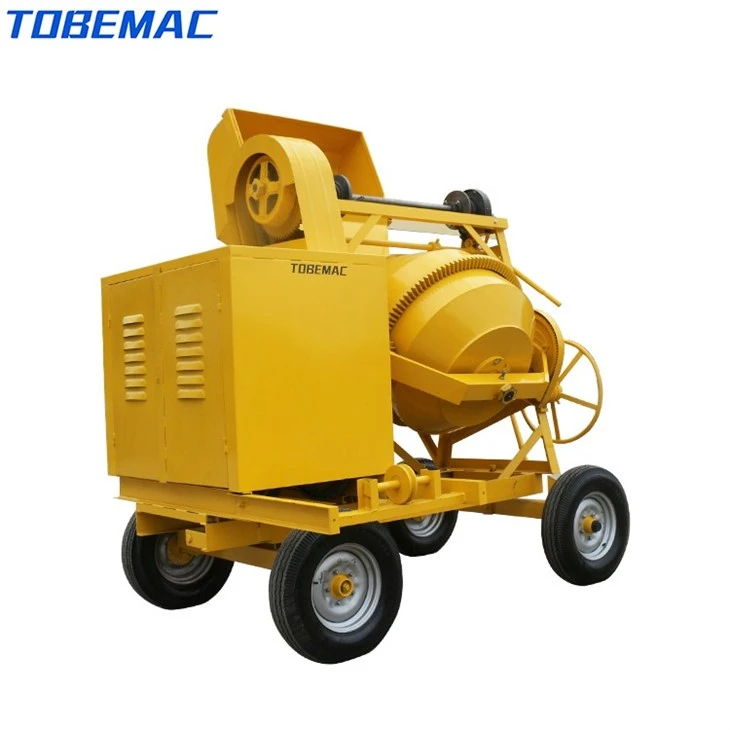
A concrete mixer is a device that homogeneously combines cement, aggregate, and water to form concrete. A typical concrete mixer uses a revolving drum to mix the components.
Benefits of Concrete Mixer
On-site concrete mix control
Using a concrete mixer puts you back in control right on the construction site. Your concrete will be fresh and exactly the right degree of slump. There is no need to accept whatever quality of mix comes out of the concrete drum.If your project requires strong, dry concrete, you simply adjust the mix by adding less water. Changing the consistency of the material is as easy as using a touchscreen. Therefore, you can use your workforce more effectively.
Quantity control and cost savings
Trucking in ready mixed concrete might seem convenient but it is hard to gauge exactly how much you need. Granted, experienced project managers are able to estimate quantities well. However, an estimate is never as precise as it is to start and stop pouring when you need to.
Smaller projects benefit especially. Not every construction site needs a full truck’s worth of concrete. By using a volumetric mixer, you mix to your requirements and there is no need to pay for a full truckload. Alternatively, if you need to supply concrete to different sites, a concrete mixer can travel between those.
Mixes can easily be adjusted between sites with a few adjustments on the touchscreen of the commander control system.Using a concrete mixer minimizes operational costs on every project.
Speed of pouring
Unexpected delays are one of the biggest problems in any construction project. They soon add up to put the whole job behind schedule and lead to additional costs. Ideally, you want to start pouring concrete as soon as the form is finished.Waiting for a new batch of concrete is a thing of the past if you have your own mixer ready on-site. Your team can easily see when concrete is needed and how much of it. You avoid waiting around for the next delivery.
In addition, your site is never blocked by an endless line of trucks cueing up to deliver to you. No time is lost on-site, and the project progresses more smoothly. Staying on track is an excellent way to impress your clients, increase your credibility, and encourage repeat projects.
Perfect for remote locations
Deploying large quantities of concrete in remote locations is challenging. Moreover, if the trucks are stuck on the road in a hot environment, you may have to add water to the slump to make the mix workable again. As a result, your mix is weaker.Volumetric mixers allow you to transport the ingredients on the truck but in separate bins until you are ready to mix and pour. The mix will be exactly what the project requires.
Large jobs can be handled by one or two volumetric mixers if you create a continuous flow system. Material bins are steadily refilled as the mixer pours. The automated control system ensures that the mix is exactly what you need, and the refills ensure there is no need to stop until you are ready to.You avoid a long supply line or having to set up a temporary batch plant, adding convenience to even more cost savings.
More sustainable
Not only is using concrete mixer cost-effective, but it is also good for the environment. Mixing only what you need reduces concrete waste. Especially when building far away from the plant, owning a volumetric mixer avoids long travel times and the repeated journeys trucks would need to make.Plus, you can recycle materials in your mix. Demolished concrete and latex paint are only two of the materials that can be reused. The latex can help create a dense mix that does not require defoaming to remove air. It’s another way of saving time and costs at a site.
-

-
 Lebanon Concrete Mixer Export Africa Can Be CustomizedLebanese concrete mixer for saleAdd to Inquiry
 -

-
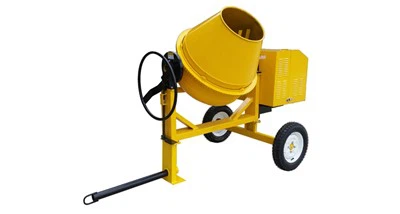 Diesel-powered Concrete Mixer For SaleProduct Description 1.Why choose us? TOBEMAC----CHINA Leading Construction Machinery ManufacturerAdd to Inquiry
 -
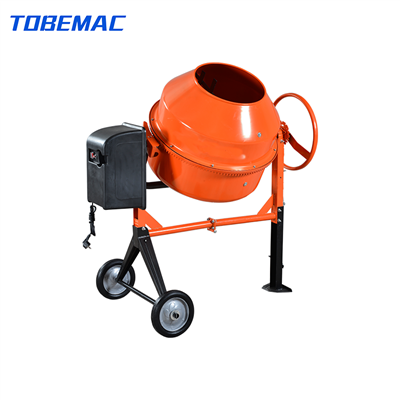 Small Electric Household Concrete Mixer For SaleThe portable electric concrete mixer is an essential tool for those involved in construction,Add to Inquiry
 -
 TOBEMAC Diesel Power Small Concrete MixerThe portable electric concrete mixer is an essential tool for those involved in construction,Add to Inquiry
 -
 140liter Portable Concrete MixerThe 140-liter portable concrete mixer is an essential tool for construction professionals and DIYAdd to Inquiry
 -
 120liter Portable Concrete MixerA 120-liter portable concrete mixer is a fantastic investment for any construction or DIY project.Add to Inquiry
 -

-
 Small Portable Concrete MixerModel: CM350-2A/2C, CM350-4A/4C, CM400-2C, CM400-4C, CM500-2C, CM500-4C, CM500-4DAdd to Inquiry
 -

-



- Tel: +8618857919561
- Fax: +86-571-64142286
- Email: sales@tobemac.com
- Add: Hutang Industrial Park, Daciyan Town, Jiande City, Zhejiang Province, China
Why Choose us
Wide range of products
They offer a wide range of products, including concrete mixer truck, concrete boom pump, concrete batching plant, and other heavy construction machinery and equipment.
Experienced team
Their team members have years of experience in the construction machinery industry, and they have a good understanding of the needs and requirements of their clients.
Quality assurance
They have a strict quality control system and have achieved ISO 9001:2015 certification. Their products are tested at different stages of production to ensure quality and reliability.
Satisfied customers
They have served numerous clients from all over the world, and their customers are highly satisfied with their products and services.
Competitive prices
They offer highly competitive prices for their products, ensuring that customers get the best value for their money.
Types of Concrete Mixer
Batch concrete mixers
Batch mixers are widely used machines for concrete mixing. Concrete mix obtained by this mixer is collected batch by batch and time by time. So, it is called as batch mixer. After pouring all the materials into pan or drum, it mixes all of those for some time and finally discharges. This process is repeated until required amount of concrete mix is obtained. In general Batch mixers are two types.
• Drum type mixers
• Pan type mixers
Drum type mixers
In case Drum type mixers concrete ingredients are mixed in a drum which is actually in double conical frustum shape. Drum types mixers are classified into three types:
• Tilting drum mixers
• Non-tilting drum mixers
• Reversing drum mixers
Tilting drum mixers
Tilting drum mixer means the drum will discharge concrete by tilting downwards. It is rapid discharge process and used for larger projects. Rapid means it delivers concrete by gravity that is tilting the drum downwards because of this the concrete mix obtained will be not subjected to segregation. Low workable concretes which contains large sized aggregates of size greater than 7.5cm are also mixed efficiently with this tilting type mixers. But the mixing efficiency depends on some of the factors as follows:
• Shape of the drum
• Angle of the drum
• Size of blades
• Angle of blades
Non-tilting drum mixers
Non- tilting drum mixers are not allowed to tilt and the drum rotates about its horizontal axis. For the discharge of concrete a chute is arranged in inclined position which will receives the concrete mix from drum and discharges out. In this case, the drum is opened at two ends and consists blades insides when materials are poured through one end and mix is collected through another end. Rapid discharge of concrete is not possible in this case. Due to this delay, the concrete may be vulnerable to segregation. The larger size aggregate is not discharged easily with the mix. So, size of aggregate mot more than 7.5cm is preferable for this type of mixers. So, this type of mixers are generally used for small projects.
Reversing drum mixers
Reversing drum mixers are similar to non-tilting type mixers but in this case reversal of rotation takes place for different action. The drum has two openings, one end is for pouring materials and other end is for discharge of mix. The drum rotates about its horizontal axis. The rotation of drum takes place in one direction for mixing and in opposite direction for discharging. Two different set of blades are arranged for mixing and discharging. They are suitable for dry concrete mixes.
Pan type concrete mixers
Pan type mixers consists a circular pan in which concrete is mixed. The mixing is done by blades which are arranged in star shape inside the pan. There are two types of pan mixers are available. In one case, the circular pan is constant and only star blades rotate about vertical axis of pan. In the other case, circular pan rotates while the blades are at static position. But in both cases, the mixing is efficient and concrete mixture is collected through central hole provided in the pan. The rotating star blades contains special blades called scrapper blades which will make concrete not to stick to the pan. The blades can also be adjusted in height so, there is no room for concrete to store in the pan. We can say among the all types of batch mixers pan type mixer are more efficient.
Continuous concrete mixers
Continuous mixer, the name itself telling its duty that the loading, mixing and discharging of mix is continuously done until the work is complete or work break occurs. The loading of materials is done continuously by screw feeders. Continuous mixtures are used for very large projects such as dams, bridges, construction of high rise buildings, etc.
How to Use a Concrete Mixer: Getting Started
The first step in using a concrete mixer is to set it up. Start by selecting a flat, level surface for the mixer to stand on. The surface should be able to support the weight of the mixer and the amount of concrete you will be mixing.Next, assemble the concrete mixer according to the manufacturer's instructions. This usually involves attaching the mixing drum to the frame of the mixer and connecting the motor or engine. Once the mixer is assembled, fill the drum with the correct amount of cement, sand, and water as per the manufacturer's instructions.
Once the concrete mixer is set up and loaded with the correct amount of cement, sand, and water, it is time to start mixing. Turn on the motor or engine and allow the mixer to run for a few minutes to ensure the ingredients are thoroughly mixed.
As the mixer rotates, use a shovel or trowel to guide the mixture towards the center of the drum. This ensures that all the ingredients are evenly mixed. Be careful not to overload the drum, as this can cause the mixer to become unstable.
When the mixture is fully mixed, it is time to pour the concrete. Tilt the drum of the mixer using the lever or handle provided and guide the mixture out of the drum and into a wheelbarrow or onto a tarpaulin. Use a trowel or shovel to ensure the concrete is spread evenly.
Cleaning the concrete mixer is an important step to ensure it remains in good working condition. Begin by pouring out any remaining concrete mixture and then rinsing out the drum with water. Use a high-pressure hose or power washer to remove any remaining residue.
If there is any buildup of dried concrete in the drum, use a chisel or scraper to remove it. Make sure to wear gloves and protective eyewear to avoid injury. Finally, dry the mixer thoroughly before storing it away.
Mixing it Up: Unconventional Uses For a Concrete Mixer
Manufacturing alternative materials
The concrete mixer is known for its amazing ability to mix aggregates, water, and cement to create a strong substance used in construction. Because modern concrete mixers also come with exciting innovations that help better control the drum rotation and how composites are introduced to the mix, not to mention the host of other helpful technologies that have been added. Hence, they have become more reliable in manufacturing these new alternative materials.
Concrete mixer: Offshore construction and deep-sea exploration
The concrete mixer has become essential in offshore construction projects and deep-sea exploration in our vast oceans. These industrial machines are usually associated with the construction that takes place on land. However, they have a new purpose on the high seas, helping create artificial islands, offshore wind farm installations, and constructing underwater structures like concrete sculptures.This section will focus on how the concrete mixer is used in offshore endeavours and its role in allowing humans to explore the ocean's depths.
Artificial islands and offshore wind farms
A concrete mixer is a virtual machine in the creation of artificial islands. This machine is used for various reasons, including creating a foundation for offshore installations and expanding different areas for development.The concrete mixer tirelessly blends and mixes precise combinations of cement, water, and aggregates to create massive volumes of concrete that will form the base for the structures of these islands.
Once these islands are constructed, they can house important infrastructures like oil rigs, airports, or renewable energy installations. For example, offshore wind farms use the power of the wind to generate sustainable energy, and the concrete mixer plays an important role in their construction. The concrete mixer ensures that sturdy foundations can be built. These foundations are called monopiles, driven into the seabed for support. These structures need to withstand the harsh marine environment and powerful currents.
Underwater structures and exploration
A concrete mixer is an amazing machine that is not limited to construction on the surface. They also have a role in underwater construction and exploration. From helping construct artificial reefs to installing underwater pipelines, these machines provide the ability to create strong structures that can stand against the harsh conditions of the ocean.
Furthermore, concrete mixers have aided in significant advancements in deep-sea exploration. Researchers and scientists have adjusted these machines to manufacture specialised concrete that can withstand great pressure and harsh conditions in the depths of the ocean.
Concrete mixer go underground: Revolutionising tunnel construction
There is a lot that we may not know about the world beneath our feet. Beneath the earth's surface is a world of tunnel construction taking place. This is where concrete mixers come into play. These machines have revolutionised the construction of tunnels.Here are a few ways the concrete mixer has helped with the unconventional construction of underground tunnel systems.
How to Maintain Concrete Mixer?
Daily
• Check concrete mixer is empty before starting in morning.
• Ensure there is no waste concrete on floor or walls of mixer. Remove build up if necessary.
• Operate high pressure wash each time an extended break in production occurs.
• Clean out mixer with high pressure washer and wand at end of daily operation.
• Check to see discharge chute is also clean.
• Check cement weigh hopper discharge valve is clear of buildup via inspection panel on base of weigh hopper.
• When cleaning any build up on mixer arms, mixing blades, scraper blades, and wall and floor tiles, do not use metal hammers as these items are cast iron and therefore brittle. Use plastic head hammer.
• Ensure that door seal track is clear of buildup.
Weekly
• Check clearance between mix blades and floor of mixer. Adjust to approximately 3 mm clearance, if necessary, by adjusting mixer blade height.
• Check clearance between wall scraper blades and wall tiles. Adjust to just clear wall tiles on circumference.
• Rotate mixer by hand to check clearance on all floor and wall tiles before starting machine after adjustment. Always check bolt tightness after any adjustments.
• Grease all nipples on top of fixed gearbox. Do not over grease.
• Check the hydraulic oil level in the power pack tank using the sight glass. This should not require topping up unless there is a leak in the system.
• Check drive belt tension and condition of high pressure washer. Adjust if necessary.
• Check condition of wall and floor tiles for wear or damage. Casting blow holes can be ignored. When tile thickness reaches approximately 5 mm, change the full set of either wall or floor tiles as necessary.
• Use a wire brush to clean high pressure washer spray heads to remove and cement/concrete build up which may block nozzles.
Monthly
• Check condition of discharge door seal and replace if leakage is occurring.
• Check oil level in gearboxes. Use dipstick on fixed gearbox and overflow plug on rotating gearbox. Do not overfill either box. The oil level in the fixed box should just be up to the dipstick base. The oil may seem emulsified, this is not water contamination and is a normal appearance for this oil (ROL EP150 or equivalent). The gearboxes should not use oil and if a reduction in level is noted it indicates leakage and should be investigated.
• Check oil level on high pressure water pump. Top up as necessary to sight gauge marker.
• All other maintenance such as changing gear box oils (after two years or 4000 hours operation, whichever is soonest) should be carried out by a competent service engineer.
About Us
Hangzhou Tob Engineering Machinery Co.,Ltd.,is one of the professional manufacturers of construction and engineering equipment in China. Situated in Jiande City, Hangzhou, which is about 100 kilometers away from Yiwu and 250 kilometers away from Ningbo Port, we enjoy an advantageous geographical location. The history of our manufacturing in construction machinery can be traced back to 1991. In 2008, the foreign trade department has been established and our goods started to be exported abroad. In 2016, we moved to the new factory in Jiande City, which covers an area of about 20000 square meter. We are very confident to enlarge our business scope in the brand new factory.
As a rapidly growing company specializing in the design and production of an extensive range of equipment in construction and engineering industry, we could supply you with products as follows: Concrete Mixer, Concrete Mixing Plant, Concrete Block Making Machine, Concrete Mixing Truck, Concrete Pump, Site Dumper, Wheel Loader, Small Crane, Tower Crane, Construction Lifter, Vibratory Roller, Light Tower, Plate Compactor,Tamping Rammer, Power Towel,Concrete Cutter, Concrete Vibrator ,Water Pump , Rebar Bender, Rebar Cutter and so on.

Certificate
To win more customer, we would like to give the following preferable policy:
OEM/ODM orders and customer's design are welcome.
No minimum order limit.
One-year quality warranty.

Asked Questions
As one of the leading concrete mixer manufacturers and suppliers in China, we warmly welcome you to wholesale high quality concrete mixer at competitive price from our factory. Good service and cheap products are available.
concrete trailer pump, mix truck concrete, concrete drum