


Earth Moving Machinery
What is Earth Moving Machinery
Heavy equipment, heavy machinery, earthmovers, construction vehicles, or construction equipment, refers to heavy-duty vehicles specially designed to execute construction tasks, most frequently involving earthwork operations or other large construction tasks.
Benefits of Earth Moving Machinery
Quality improvement
This equipment allows contractors to complete their work with minimal quality defects liability clause. This shields construction companies from claims arising from poor quality. Other than this, this equipment improves both reliability and quality which are the most significant criteria for evaluating construction equipment company’s performance.
Project efficiency
They overcome the many disadvantages associated with manual labour, from its inconsistency- due to weather changes, attendance, social health as well as economic conditions and many other factors. It takes a shorter time to complete construction activities which are an advantage to the owner of the construction site.
Cost saving and profitability
They can reduce the cost of large scale projects. It also makes it easier for the companies to complete their projects within budget at a reduced overall cost. Their increased productivity and reliability ultimately translate into high profits from fewer defect related claims and avoidance of delay penalties.
Safety
High-risk activities occur in construction sites during construction activities. There are safety risks if the workers are operating on the ground especially within confined spaces and there are movements of heavy materials.This equipment will mitigate and even prevent these risks thus, enhancing the safety of the workers around the machine.
Performing daily tasks
You can use the road roller to compress sand, gravel, and concrete in the construction of foundations of roads and traits.You can use post hole diggers to dig moderately small holes for fitting fence poles and posts. You can also use them in farming, landscaping, and construction.Cranes lift and move heavy loads as well as eliminating wastes in construction sites.
Enhances mining
People may not be in a position of digging oil wells manually. Therefore, drilling machines are essential in doing this task.Mining companies use them to move the earth and minerals. Electric shovels and giant draglines with buckets remove a large amount of yard in one scoop hence enhancing surface mining.Complex materials that can move materials in a much headroom and limited space enhance underground mining.
-
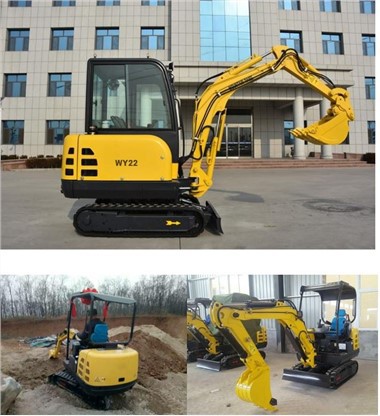 TB2.2T Hydraulic ExcavatorAdd to Inquiry
 -
 MINI EXCAVATOR TB181.Small size and easy to transport, could be loaded onto light truck or small trailer, four setsAdd to Inquiry
 -
 TB101. Small size and easy to transport, could be loaded onto light truck or small trailer, sixsetsAdd to Inquiry


- Tel: +8618857919561
- Fax: +86-571-64142286
- Email: sales@tobemac.com
- Add: Hutang Industrial Park, Daciyan Town, Jiande City, Zhejiang Province, China
Why Choose us
Wide range of products
They offer a wide range of products, including concrete mixer truck, concrete boom pump, concrete batching plant, and other heavy construction machinery and equipment.
Experienced team
Their team members have years of experience in the construction machinery industry, and they have a good understanding of the needs and requirements of their clients.
Quality assurance
They have a strict quality control system and have achieved ISO 9001:2015 certification. Their products are tested at different stages of production to ensure quality and reliability.
Satisfied customers
They have served numerous clients from all over the world, and their customers are highly satisfied with their products and services.
Competitive prices
They offer highly competitive prices for their products, ensuring that customers get the best value for their money.
Types of Earth Moving Machinery
Excavator
An excavator is one of the most expensive heavy machinery for construction sites. Trenches, holes, and foundations are dug with it. It has a boom, stick, bucket, undercarriage, and operator cabin. The operator cabin, also called the house, is supported by tracks or wheels and positioned on top of an undercarriage. To complete its tasks, a hydraulic excavator depends on the strength of hydraulic fluid, pumps, and motor. Various excavators are available, and each has unique features that help with the job on the worksite. For instance, tracked excavators can be used for demolition, material handling, and digging. Conversely, mini-excavators are lightweight and compact, perfect for utility and trenching work.
Backhoe loader
Three different types of heavy construction machinery are combined in the backhoe loader. It is made up of a backhoe, a loader, and a tractor. They are suitable for earth-moving tasks in urban areas because of their mobility. They are utilised for excavation tasks such as trench digging, pipe laying, trench filling, and material lifting, among other things. One of the most widely used pieces of earth-moving equipment in India is the backhoe loader.
Wheel loader
Front loaders, also called wheel loaders, are heavy-duty machines that can carry a lot of weight. A wheel loader is primarily used on-site to dig, carry, haul, and transport materials. A wheel loader comprises an arm and a scoop or hauling bucket for moving bulky materials. They can be used for landscaping and agriculture in addition to construction sites. Loaders are perfect for projects of any size because they come in various sizes.
Motor grader
The motor grader is a powerful piece of equipment with a long multipurpose blade. Motor graders are mainly used in building engineering, road construction, and mining sites to create smooth roads. Graders can be equipped with unique attachments, such as a ripper, scarifier, blade, or compactor, to make them multifunctional.
Skid-steer loader
Skid-steer loaders—small, tyre-mounted construction equipment—are frequently used on construction sites with limited space. The lift arms on the machine are made to latch onto various attachments. On each side, the skid-steer loader’s wheels are locked in synchronisation. With the help of this mechanism, it is possible to drive the left-side drive wheels autonomously of the right-side wheels. The frame of the skid-steer loader is robust and rigid. Strong wheel bearings are necessary to keep this machine from being damaged by torsional force brought on by motion.
Trencher
A trencher is a piece of heavy machinery used to dig trenches, particularly for installing drainage, laying pipes or electrical lines, or as a prelude to trench warfare. Trenchers come in various sizes, from walk-behind models to skid loaders or tractor attachments to very large tracked heavy machinery.
Bulldozer
A bulldozer is a tractor with a large metal plate, or “blade,” used to push loads of soil, sand, rubble, or other similar materials during construction or conversion work. The bulldozer is typically equipped with a claw-like device, or “ripper,” at the rear to break up tightly compacted materials. Typically, a tractor with continuous tracks is called a crawler. In addition to mines and quarries, farms, heavy industry factories, military bases, and engineering projects are just a few locations where bulldozers are used.
Paver
Asphalt is laid on roads, bridges, parking lots, and other structures using construction equipment known as pavers (also known as paver finishers, asphalt finishers, or paving machines). Before a roller compacts the asphalt, it flattens the surface and provides some minor compaction.
Compactor
A compactor is a device or method used to compact material, such as waste or biomass, to reduce size. A business or residence frequently uses a trash compactor to lessen the amount of trash it generates. Compact and wrapped bales are frequently created to enhance logistics using a baler-wrapper compactor. Compactors typically use hydraulic power and come in various sizes and shapes. For instance, in landfill sites, a large tractor known as a landfill compactor is used to trample solid wastes generated by waste collection vehicles. This tractor is typically a transformed front-end loader with just some variation of a bulldozer blade attached.
Dump truck
A dump truck, also called a dumper truck or tipper truck is used to transport coal and dumps (such as sand, small stones, or demolition waste) for building projects. The open-box bed of a typical dump truck is hinged at the back and has hydraulic raiders to lift the front, allowing the contents inside to be “dumped” on the ground behind the truck at the delivery site.
Earth Moving Machinery Maintenance Best Practices
Clean your earth-moving machinery
A great way to keep earth moving machinery safe is to clean it thoroughly. This type of equipment has to do difficult and dirty work, which can alter the performance of the machine. Because of this, earth-moving machinery and all its parts should be cleaned regularly.
Dirt, grime, and debris will start to accumulate on and in parts of the equipment. These parts and tools become damaged, malfunction, or stop working eventually if you don't clean them properly. It's important to only clean heavy machines with solutions that the manufacturer recommends. This helps avoid damaging delicate parts with harsh chemicals.
Train employees to operate earth-moving equipment
Your earth-moving machinery's parts and tools are in danger of becoming damaged or completely broken if an untrained worker attempts to operate them. The worker is in danger of becoming injured or hurting others.
To protect your employees and equipment, all workers need to be properly trained to operate earth-moving equipment. No one should operate heavy machinery without adequate training and qualifications. Training teaches workers the limits a specific piece of heavy machinery may have, how to use the right tools for the job, take proper safety measures, and follow operating guidelines.
In addition, have a qualified employee look at the area where you're going to use the equipment, and let them do a risk assessment. They can take a careful look at the machinery and the environment to make sure it's safe and meets all requirements before operating. In most construction and mining sites, having a skilled worker that supervises the operation of heavy machinery is vital. This person should have the training and experience necessary to make sure the operator and anyone in the immediate area stay safe.
Lubricate your equipment carefully
Heavy earth-moving equipment and associated parts and tools will malfunction or become damaged if they aren't lubricated properly. Moving parts and components need lubrication because the frequent movement causes friction. This friction can severely damage the parts and tools of earth-moving machinery.
To keep them safe, lubricate every joint as well as all other areas that require lubrication. Do this regularly, but be careful never to use too much, as excess lubrication can cause grease build-up and other problems.
Take steps to avoid injuries
Teach construction workers to spot any potentially dangerous problems and how to handle any situations that might occur. For example, if they have to drive up or down a steep hill, they must know how to select the proper gear.
They also need to know what angle to drive at because they could topple over if they make a mistake. This can result in life-threatening injuries.
That's why it's so important to teach your crew how to avoid falling off earth moving equipment. Place durable guardrails on your earth-moving machinery. Employees also need to repair earth-moving equipment while standing on the ground whenever possible for safety.
Workers who aren't operating heavy machinery should maintain a safe distance from it while it is moving. Also, be sure all heavy equipment is parked in a safe area. Place cones around it to protect your employees and the equipment.
Maintain earth moving equipment properly
Heavy machinery and tools that aren't properly maintained can be dangerous to operate. Improper maintenance can cause the tools and other parts to become damaged and unsafe as a result. Small problems that aren't repaired may eventually become massive issues that require entire sections to be replaced.
Inspect earth moving equipment regularly
Regular equipment inspections go hand-in-hand with preventive maintenance.Your inspection schedules may vary depending on the types of earth-moving equipment you have and how often you use it, but it's a good idea to conduct these inspections at least once a year. If you don't have an in-house mechanic, consider hiring someone to inspect your equipment.
Make sure they document their findings using a mobile app or a software platform.That way, you can maintain equipment inspection records from one year to the next, no matter who inspects your equipment the following year.You also have a record of any parts you repaired or replaced and the costs.
Use the right parts and tools
You shouldn't try to attach tools to heavy machinery and use them if they won't fit or aren't compatible. If you attempt to do this, you are putting the machinery at risk. Employees are also at risk. Read through the manufacturer's manuals, and find the right parts and tools.
Also, when your machinery is going to be used to do a certain job, check to see what kind of tool is best. By selecting the right tool, you'll do the job more efficiently, and you'll keep the equipment, operator, and tools safe.
Factors to Consider When Choosing Earth Moving Machinery
Project requirements
Assess the project's specific needs, such as the type of tasks, terrain and materials involved. This will help determine the appropriate earthmoving equipment required for the job.
Machine size and capacity
Consider the size and capacity of the equipment in relation to the project's requirements. Choosing the right size will ensure optimal performance and efficiency.
Maintenance and support
Evaluate the availability of spare parts, maintenance demands and the manufacturer’s support services. Selecting equipment from reputable brands that offer reliable after-sales support is advantageous.

Application of Earth Moving Machinery
Excavating and construction
Earth-moving machinery is essential in building construction projects where digging and excavation, leveling and grading, and various material handling tasks are needed.
Mining
Large earth-moving equipment is used in mining activities such as surface mining where massive quantities of earth and rock are removed to expose the desired minerals.
Agriculture
Earth-moving machinery is employed to level land in preparation for farming and to dig irrigation channels that regulate water flow across farms.
Landscaping and gardening
Earthmoving machinery is used in the creation and maintenance of outdoor spaces to shape and sculpt the grounds, remove trees and other obstacles, and redistribute soil and gravel.
Demolition
Excavators and bulldozers are commonly used for demolishing buildings and other structures. They help to remove large chunks of concrete and clear debris from the site.
Transportation
Heavy equipment is essential in transportation and infrastructure projects such as road and bridge construction and maintenance.
Landfills
Earth-moving machinery is used to manage large volumes of waste in landfill sites, compacting garbage and leveling out the waste to ensure it is contained within the necessary area.
Flood prevention
Earth-moving machinery is also used to reinforce embankments and levees to help prevent flooding.
Military
The military also employs earth-moving machinery in their operations, especially for fortification purposes such as digging trenches and building temporary shelters.
About Us
Hangzhou Tob Engineering Machinery Co.,Ltd.,is one of the professional manufacturers of construction and engineering equipment in China. Situated in Jiande City, Hangzhou, which is about 100 kilometers away from Yiwu and 250 kilometers away from Ningbo Port, we enjoy an advantageous geographical location. The history of our manufacturing in construction machinery can be traced back to 1991. In 2008, the foreign trade department has been established and our goods started to be exported abroad. In 2016, we moved to the new factory in Jiande City, which covers an area of about 20000 square meter. We are very confident to enlarge our business scope in the brand new factory.
As a rapidly growing company specializing in the design and production of an extensive range of equipment in construction and engineering industry, we could supply you with products as follows: Concrete Mixer, Concrete Mixing Plant, Concrete Block Making Machine, Concrete Mixing Truck, Concrete Pump, Site Dumper, Wheel Loader, Small Crane, Tower Crane, Construction Lifter, Vibratory Roller, Light Tower, Plate Compactor,Tamping Rammer, Power Towel,Concrete Cutter, Concrete Vibrator ,Water Pump , Rebar Bender, Rebar Cutter and so on.

Certificate
To win more customer, we would like to give the following preferable policy:
OEM/ODM orders and customer's design are welcome.
No minimum order limit.
One-year quality warranty.

Asked Questions
As one of the leading earth moving machinery manufacturers and suppliers in China, we warmly welcome you to wholesale high quality earth moving machinery at competitive price from our factory. Good service and cheap products are available.
transit mixture machine, 240v cement mixer, ready mix concrete trucks