


Portable Concrete Mixer
What is Portable Concrete Mixer
A typical portable concrete mixer uses a small revolving drum to mix the components. For smaller jobs the concrete made at the construction site has no time lost in transport, giving the workers ample time to use the concrete before it hardens.
Benefits of Portable Concrete Mixer
Time efficient
A reasonably important benefit of a small concrete mixer is that it can save labour effort and time. Even though these mixer types feature small cement mixer drums, mixing cement and concrete by hand is hard labour and time-consuming. This machine allows you to make better use of these so you can focus on other aspects of construction tasks.
Cost efficient
The small cement mixer can save you money because there's no need to hire more employees to mix the concrete by hand. Furthermore, you will also save on material because only the right amount and portions of all concrete ingredients go into the concrete mixer drum. If you need a concrete mixer for your home needs, there's no need to buy one, you can just hire it at a fraction of price to purchase.
Keeps you healthy
Manually mixing a concrete requires a lot of effort and can be painful for your shoulders, back and muscles. A small cement mixer helps to make the building process painless. This cement mixer bowl makes the job easier and provides superior results since the mixture that this machine can create is more homogeneous.
Portability
The portable concrete mixer is highly portable, making it easy to move from one site to another. Its compact design allows it to fit into tight spaces and be transported in smaller vehicles, such as trucks or trailers.
-
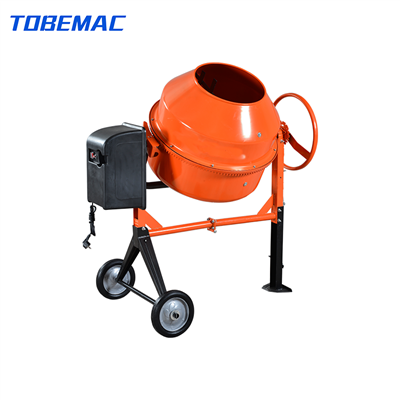 Small Electric Household Concrete Mixer For SaleThe portable electric concrete mixer is an essential tool for those involved in construction,Add to Inquiry
 -

-
 Small Portable Concrete MixerModel: CM350-2A/2C, CM350-4A/4C, CM400-2C, CM400-4C, CM500-2C, CM500-4C, CM500-4DAdd to Inquiry
 -

-

-
 Mini Concrete Mixer MachineModel:CM350-2A/2C,CM350-4A/4C,CM400-2C,CM400-4C,CM500-2C,CM500-4C,CM500-4DAdd to Inquiry
 -
 Portable Diesel Concrete Mixer with PumpModel:CM350-2A/2C,CM350-4A/4C,CM400-2C,CM400-4C,CM500-2C,CM500-4C,CM500-4DAdd to Inquiry
 -
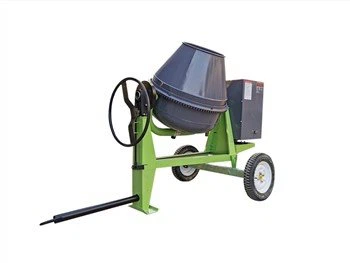 Hand Held Concrete MixerModel:CM350-2A/2C,CM350-4A/4C,CM400-2C,CM400-4C,CM500-2C,CM500-4C,CM500-4DAdd to Inquiry
 -
 Mobile Volumetric Concrete MixerModel:CM350-2A/2C,CM350-4A/4C,CM400-2C,CM400-4C,CM500-2C,CM500-4C,CM500-4DAdd to Inquiry


- Tel: +8618857919561
- Fax: +86-571-64142286
- Email: sales@tobemac.com
- Add: Hutang Industrial Park, Daciyan Town, Jiande City, Zhejiang Province, China
Why Choose us
Wide range of products
They offer a wide range of products, including concrete mixer truck, concrete boom pump, concrete batching plant, and other heavy construction machinery and equipment.
Experienced team
Their team members have years of experience in the construction machinery industry, and they have a good understanding of the needs and requirements of their clients.
Quality assurance
They have a strict quality control system and have achieved ISO 9001:2015 certification. Their products are tested at different stages of production to ensure quality and reliability.
Satisfied customers
They have served numerous clients from all over the world, and their customers are highly satisfied with their products and services.
Competitive prices
They offer highly competitive prices for their products, ensuring that customers get the best value for their money.
Different Uses for Portable Concrete Mixers
General concrete work and repairs
At its most basic level, the concrete mixer functions to combine cement with either gravel or sand, as well as water to form what we know as cement. Most portable mixers use a revolving drum to achieve this function. The most common use of portable concrete mixers is to mix conventional cement for residential or commercial usage, wherein the machine’s easy-to-move nature comes in handy and reduces job and labour efforts.
Flowable fill concrete
Portable concrete mixers are often used to create flowable fill, which is also called controlled low strength material. This is a flowable mix which comprises sand, cement, flyash and water (or foam admixtures). If you have never heard of flowable mix, you may be wondering exactly why it exists and what function it serves. Flowable fill is commonly well-liked as it is versatile in both design and function, and is usually used to fill up empty holes and trenches. During placement, flowable fill does not create voids, neither does it rut or settle under loading.
Rapid setting concrete
Rapid setting concrete is manufactured by various companies using sand, cement and selected aggregates and additives. In some cases, people need not even use their portable concrete mixers, and need only add water to seal the deal when using this type of concrete. However, this is not always the case. This type of concrete is famed for how quickly it hardens (usually around 15 minutes) in the right conditions.
Pervious concrete
Pervious concrete refers to a structural concrete pavement that has a large volume of voids that are interconnected. Similar to conventional concrete, it is mixed in portable concrete mixers as a mixture of coarse aggregates, cement and water. However, what makes it different is that it contains little to no sand – which is why it presents as an open-cell, porous structure that allows for the easy passage of water. Pervious concrete is often used for paving since it can take in a considerable amount of storm water and prevent runoff issues during rainfall.
Overlay concrete
There are various types of concrete overlays, all readily mixed in your reliable cement mixers of choice. In its most basic form, overlay concrete consists of a thin colour concrete that goes on top of existing concrete – either as a means of repair, decoration or protection.
Power supply
There are two main portable concrete mixer options: fuel and electric mixer. The type of power supply you need will determine the right mixer for the job. In other words, You should ensure you have a power supply when purchasing an electric unit. On the other hand, a petrol engine allows you to work independently of the electric power supply. Typically, Fuel engines are robust, durable, and mix relatively bigger volumes of concrete. However, they are more decadent and less environmentally friendly compared to electric machines. Diesel Fuel machines are also available in the market. The best advantage of fuel mixers is that they work in remote areas with no power supply.
Performance and capacity
This is a pretty straightforward point. If you want to boost construction work productivity, you should invest in a portable concrete mixer that offers astounding performance. For instance, large projects require large units for better and faster performance. Large mining machines churn out large volumes of concrete hence save time. On the same note, it is imperative that you consider the motor power rating of the machine. Powerful Concrete mixture machine mixes all concrete ingredients properly. For instance, a mixture machine that features a 1500 RPM motor offers the top results. In other words, it rotates 3000 times in 2 min hence delivering consistent concrete. Similarly, a high motor rating like ¾ HP has relatively better performance.
Size
The ideal size of a mixture depends on the type of job. A portable concrete mixer is easy to move and occupies a small space in a job site and garage. For small jobs, a small concrete mixer will get the job done. On the other hand, a concrete mixture machine with massive capacity comes in handy if you plan to mix a lot of concrete at once. Typically, the larger mixture machines have a capacity of 6 cubic feet. To put this into perspective, a drum with a 3.5-foot cubic capacity holds about 80 pounds of concrete.
Durability
When buying a portable concrete mixer, you should go fora robust machine that will withstand the tests of time. This means that the tank and frame should be strong and durable. In other words, it reduces the risk of the mixer falling when placed on rough terrain. Remember, construction tools experience a lot of wear and tear on the job site.
Build quality is a paramount consideration. Luckily, some options come with an extended warranty spanning up to two years. The good news is that electric motor mixtures are designed with IP45 AND 1P55 for water resistance. They protect damage from the water used in concrete and hence, boost durability.
Plastic or poly drums are lightweight and easier to clean. However, abrasion from concrete causes faster wear. On the other hand, steel drums last long. However, they tend to be heavier and harder and require a more powerful motor. What’s more, steel machines have long durability compared to aluminum ones.
Portability
Depending on the nature of your construction job, you can opt for stationary mixer mobile units. Stationary mixers are a perfect choice if you prepare concrete on one job site. However, if you move between several job sites, you should consider choosing an on-site mobile unit. For sturdier and larger machines, you will want to consider the trailer-mounted mixer. The point is that portable concrete mixers are generally lightweight and smaller and can be moved around with ease.
What is the Difference Between Cement Mixer and Portable Concrete Mixer?
Cement mixers
Cement mixers are designed to mix cement, sand, and water to create a mixture known as cement. Cement is a binding agent that is used to hold building materials together. Cement mixers are typically used for small DIY projects or for mixing small amounts of cement at a time. They are smaller in size and are usually electrically powered.
Portable concrete mixers
Portable concrete mixers are designed to mix cement, sand, water, and aggregate (such as gravel or crushed stone) to create a mixture known as concrete. Concrete is a building material that is used for a variety of construction projects, such as building foundations, walls, and driveways. Concrete mixers are larger than cement mixers and are usually petrol or diesel-powered. They are designed for larger construction projects that require a large volume of concrete.
The key difference between a cement mixer and a concrete mixer is the materials they are designed to mix. Cement mixers are designed to mix cement, sand, and water, while concrete mixers are designed to mix cement, sand, water, and aggregate. Additionally, concrete mixers are larger and more powerful than cement mixers, and are typically used for larger construction projects.

Empty the mixer
The first step in cleaning a portable concrete mixer is to empty it of any remaining concrete or other materials. Use a shovel or trowel to remove as much of the residue as possible. If there is any leftover mixture that is difficult to remove, add some water to the mixer and let it run for a few minutes to help loosen the residue.
Rinse with water
Once the mixer is emptied of any remaining mixture, rinse it out with water. Use a high-pressure hose or power washer to remove any remaining residue from the drum. Be sure to wear protective clothing, such as gloves and eyewear, as the high-pressure water can be dangerous.
Remove dried residue
If there is any dried residue left in the drum, use a chisel or scraper to remove it. Be careful not to damage the drum or other components of the mixer. Again, make sure to wear protective clothing and eyewear to avoid injury.
Dry the mixer
After the mixer is thoroughly rinsed and any dried residue is removed, it is important to dry it out completely. Use a clean, dry cloth to wipe down the inside of the drum and the exterior of the mixer. If possible, leave the mixer out in the sun to dry completely before storing it away.
In conclusion, cleaning a portable concrete mixer is an important part of maintenance that can help prolong its lifespan and ensure it continues to operate efficiently. By following these simple steps, you can clean your cement mixer quickly and effectively. Remember to wear protective clothing and eyewear to avoid injury when using a high-pressure hose or power washer.
Types of Portable Concrete Mixer
Drum mixer
A drum mixer consists of a cylindrical drum that rotates around its axis, and an auger is used to mix the ingredients. It is suitable for small-scale construction projects and is easy to operate.
01
Reversing drum mixer
A reversing drum mixer has two sets of blades, one set to mix the ingredients and another set to discharge the mixture. It is useful for projects that require the production of a wide variety of concrete mixtures of different proportions.
02
Pan mixer
A pan mixer is used for producing small quantities of concrete. It has a flat bottomed pan and a set of blades that rotates around a vertical axis. This type of mixer is easy to clean and is suitable for mixing dry and wet concrete.
03
Tilting drum mixer
A tilting drum mixer has a drum that can be tilted to pour the mixture. It is used for producing large quantities of concrete and is suitable for sites where there is no concrete batching plant.
04
Volumetric mixer
A volumetric mixer is a mobile concrete mixer that mixes the ingredients on-site and as per required proportions. It is suitable for remote locations and projects with specific concrete strength and consistency requirements.
05
About Us
Hangzhou Tob Engineering Machinery Co.,Ltd.,is one of the professional manufacturers of construction and engineering equipment in China. Situated in Jiande City, Hangzhou, which is about 100 kilometers away from Yiwu and 250 kilometers away from Ningbo Port, we enjoy an advantageous geographical location. The history of our manufacturing in construction machinery can be traced back to 1991. In 2008, the foreign trade department has been established and our goods started to be exported abroad. In 2016, we moved to the new factory in Jiande City, which covers an area of about 20000 square meter. We are very confident to enlarge our business scope in the brand new factory.
As a rapidly growing company specializing in the design and production of an extensive range of equipment in construction and engineering industry, we could supply you with products as follows: Concrete Mixer, Concrete Mixing Plant, Concrete Block Making Machine, Concrete Mixing Truck, Concrete Pump, Site Dumper, Wheel Loader, Small Crane, Tower Crane, Construction Lifter, Vibratory Roller, Light Tower, Plate Compactor,Tamping Rammer, Power Towel,Concrete Cutter, Concrete Vibrator ,Water Pump , Rebar Bender, Rebar Cutter and so on.

Certificate
To win more customer, we would like to give the following preferable policy:
OEM/ODM orders and customer's design are welcome.
No minimum order limit.
One-year quality warranty.

Asked Questions
As one of the leading portable concrete mixer manufacturers and suppliers in China, we warmly welcome you to wholesale high quality portable concrete mixer at competitive price from our factory. Good service and cheap products are available.
portable electric concrete cement mixer, concrete mixer small truck, loading mixer