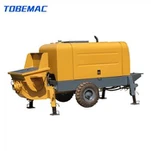
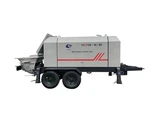
Diesel Concrete Pump has the following advantages:
1. Strong power: Diesel engines can provide strong power to ensure sufficient pumping pressure and capacity under various working conditions, such as high-rise building construction and long-distance transportation, and can easily cope with difficult concrete pouring tasks.
2. Strong adaptability:
It has relatively low requirements for the working environment. In some remote areas and field construction sites where power supply is inconvenient or insufficient, it can still work stably without being restricted by power.
It can adapt to different construction sites and working conditions, whether it is rugged ground or complex terrain, it can operate normally.
3. High reliability:
The diesel engine has a relatively simple structure, is sturdy and durable, and has a relatively low failure rate. After a long period of development and improvement, the technology is mature and the performance is stable. It can maintain good reliability in long-term and high-intensity use, reducing construction interruptions caused by equipment failure.
Even if some minor faults occur, it is relatively easy to repair, the repair cost is relatively low, and the parts are relatively common in the market and easy to obtain.
4. High pumping efficiency: It can deliver concrete quickly and continuously, effectively improve construction efficiency and shorten the project cycle. It can maintain a stable pumping speed and flow rate, ensure uniform delivery of concrete, and improve the pouring quality of concrete.
5. Good mobility: For example, a vehicle-mounted diesel concrete pump is installed on the chassis of a vehicle, which is highly maneuverable and can quickly transfer sites, making it convenient to flexibly dispatch between different construction sites to meet the construction needs of multiple construction sites.
6. Easy to operate: It is usually equipped with a more user-friendly operation control system. After a certain amount of training, the operator can quickly master the operation method, which reduces the difficulty of operation and labor intensity and improves work efficiency.